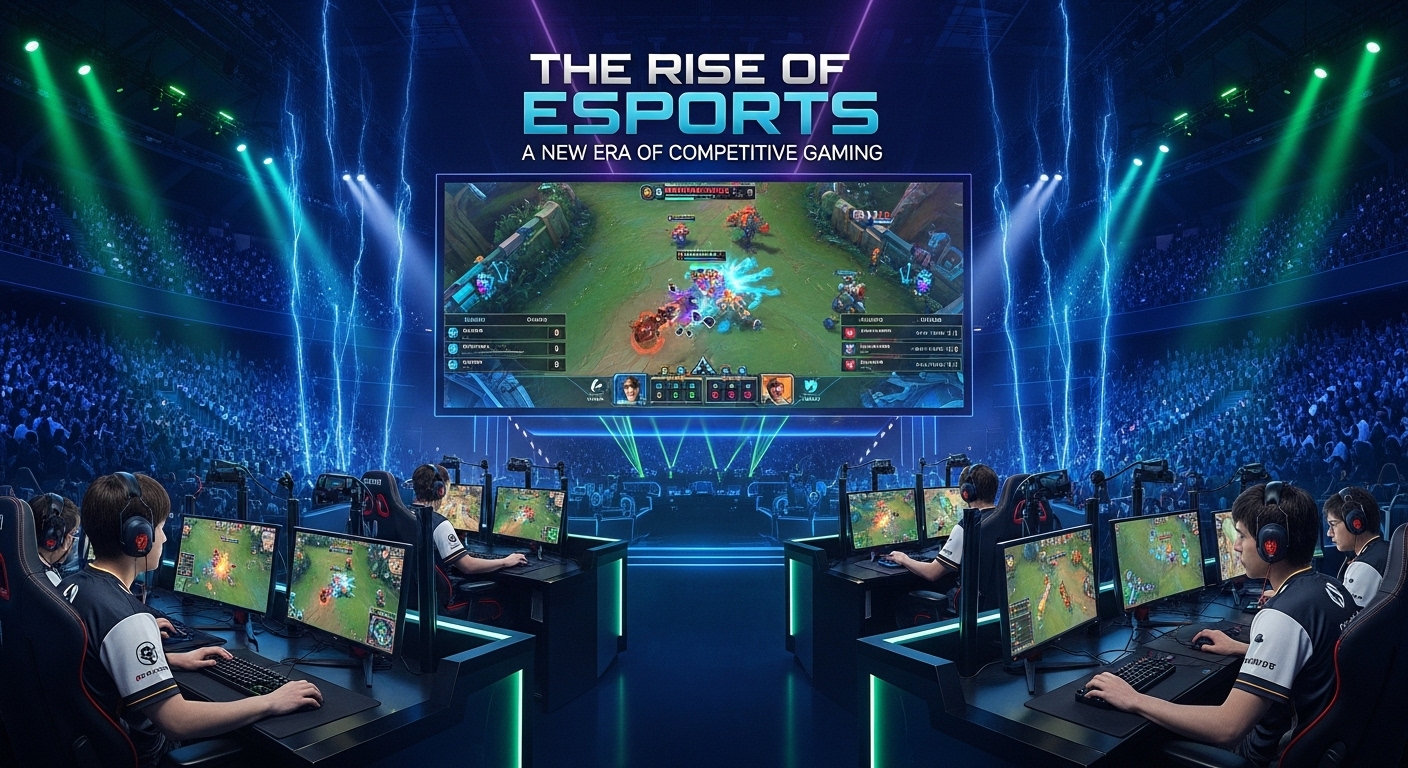
Esports has emerged as one of the fastest-growing entertainment sectors in the world, capturing the attention of millions across the globe. What once started as small-scale competitions among gamers has evolved into a multi-billion-dollar industry with massive tournaments, sponsorships, and a growing professional player base. Esports isn’t just a passing trend; it’s the future of competitive entertainment. But how did it all begin, and what is the future of this booming industry?
The Origins of Esports
Esports, short for electronic sports, refers to organized video game competitions where professional players, teams, and organizations compete at the highest level. While video games themselves have been around since the 1970s, competitive gaming didn’t take shape until the late 1990s and early 2000s. Early tournaments such as the Red Annihilation tournament for Quake and the World Cyber Games began drawing attention to the potential of competitive gaming.
In its early stages, esports was often localized, with events hosted in arenas or smaller venues. However, the explosive growth of the internet and online multiplayer gaming helped propel esports to a global stage. Games like StarCraft, Warcraft III, and Counter-Strike were among the pioneers in establishing a competitive gaming culture, attracting players, sponsors, and fans alike.
The Growth of Esports: From Niche to Mainstream
Esports’ rise to prominence can largely be attributed to its increasing accessibility and visibility. The advent of streaming platforms like Twitch, YouTube Gaming, and Facebook Gaming allowed fans to watch live tournaments from the comfort of their homes. This transformation has turned many casual gamers into passionate fans, while also providing a platform for up-and-coming players to showcase their skills to a global audience.
The entry of large companies, such as Coca-Cola, Intel, and Nike, into the esports market further validated its potential as a mainstream entertainment avenue. The large-scale production of events like The International (for Dota 2) and League of Legends World Championships has helped esports gain recognition on par with traditional sports, such as football or basketball. These events draw in millions of viewers, with some esports tournaments now being broadcast on major sports networks.
The Economic Boom of Esports
The economics of esports are multifaceted and lucrative. Players can earn money through prize money, sponsorships, and streaming platforms. The most successful esports athletes can command salaries comparable to professional athletes in traditional sports. For example, top-tier players in games like League of Legends, Counter-Strike: Global Offensive, and Fortnite can make millions of dollars in earnings from prize pools alone.
Organizations within esports are also raking in substantial revenue, thanks to lucrative sponsorships, media rights, and merchandise sales. Major companies are eager to tap into the young, tech-savvy demographic that makes up the core audience of esports, often resulting in long-term partnerships with top teams and players.
A growing number of esports leagues and franchises, such as the Overwatch League and Call of Duty League, operate similarly to traditional sports leagues. These leagues involve teams that compete on a regular schedule, adding an element of consistency and regularity to the esports scene.
Esports as a Career Path: More Than Just Playing Games
Esports is no longer just about playing games; it’s a multifaceted career path. While the dream of becoming a professional player is still alive, there are now many other roles within the esports ecosystem. From coaching and analysis to broadcasting, marketing, and event management, the esports industry provides a diverse range of career opportunities.
Professional esports organizations operate like traditional sports teams, with a focus on player development, strategy, and performance optimization. Coaches, analysts, and psychologists work with players to improve their game mechanics, teamwork, and mental fortitude. As esports continues to grow, it’s expected that more specialized roles will emerge, offering a wealth of career prospects for those interested in the industry.
Streaming has also become a legitimate career choice. Platforms like Twitch allow players and enthusiasts to build their own audiences and make money from advertising, subscriptions, and donations. Streamers have become household names, with some earning a living solely from broadcasting their gaming sessions. This has further blurred the line between professional gaming and entertainment.
The Global Impact of Esports
Esports’ global appeal is undeniable. Players and fans hail from every corner of the world, and tournaments often feature a truly international flavor. Esports has broken down geographical barriers, allowing people from different cultures and backgrounds to unite over their shared love for gaming.
The rise of esports has also fostered greater social inclusion. Unlike traditional sports, where physical limitations might prevent some individuals from participating, esports allows anyone with a computer or gaming console to compete. As a result, esports offers opportunities for individuals from diverse backgrounds, ages, and skill levels to engage and succeed in competitive environments.
In fact, some nations have even incorporated esports into their educational systems, offering scholarships for students who excel in competitive gaming. Esports is now seen as not only a form of entertainment but also a legitimate discipline, with educational programs designed to help students learn the skills necessary to succeed in the industry.
The Future of Esports: What Lies Ahead?
The future of esports looks incredibly bright, with technological innovations and a growing audience set to fuel further growth. As 5G technology becomes more widespread, cloud gaming is expected to revolutionize the way people engage with competitive games. Gamers will be able to access high-quality gaming experiences on devices that were once incapable of running such games, broadening the reach of esports to more people worldwide.
Virtual Reality (VR) and Augmented Reality (AR) could play a huge role in shaping the next generation of esports. Imagine a VR game where players not only control their avatars but physically move in a virtual space. This could introduce an entirely new layer of competition and excitement, making the gaming experience more immersive than ever before.
In addition to technological advancements, the global popularity of esports is likely to increase, with more tournaments and leagues popping up across regions. It’s not unthinkable that esports could eventually become a part of the Olympics, further legitimizing the activity as a mainstream form of competition.
Conclusion: The Esports Revolution Is Here
Esports has come a long way from its origins as a niche hobby. Today, it stands as a massive industry that is shaping the future of entertainment. With an expanding fan base, increasing investment, and greater mainstream acceptance, esports is set to continue its upward trajectory.
Whether you’re an aspiring player, an esports enthusiast, or someone looking to break into the industry, the world of esports offers vast opportunities. It’s no longer just a subculture of gaming enthusiasts but a legitimate force in global entertainment. The esports revolution is in full swing, and it shows no signs of slowing down anytime soon.